Luxury Gated Communities in South Africa: Lifestyle, Security and Returns
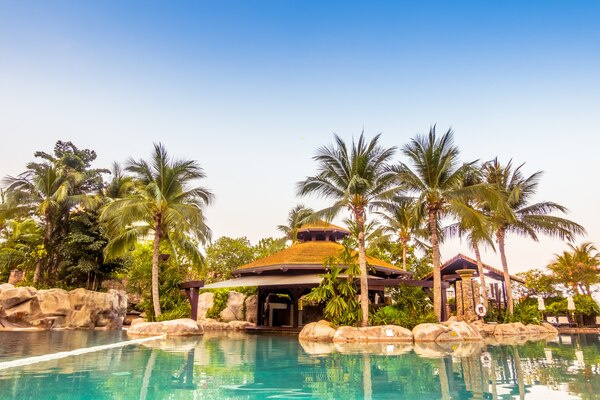
South Africa’s luxury gated communities sit at the intersection of lifestyle aspiration, security consciousness and investment strategy. Over the past two decades they have evolved from niche golf estates and coastal enclaves into self-contained, high-end microcities that shape how affluent South Africans – and a growing number of international buyers – choose to live, work and invest.
Below is a structured look at what defines this market: the lifestyle on offer, the security architecture behind the walls, and the financial logic that attracts capital.
What Defines a Luxury Gated Community in South Africa?
While designs vary, most top-end South African estates share several core characteristics:
- Controlled access and perimeter security (gates, biometrics, electric fencing, monitored cameras).
- Managed common property under a homeowners’ association or estate company.
- Architectural guidelines that protect visual coherence and long-term values.
- Amenity-rich environments – from golf courses and clubhouses to schools and medical facilities.
- Professional management including estate rules, landscaping, maintenance and security oversight.
The result is not merely a residential development, but a curated environment with its own identity, lifestyle code and often even internal economy.
Lifestyle: Curated Living Beyond the Front Door
Integrated Leisure and Wellness
Top-tier estates position themselves as lifestyle destinations, not just places to sleep.
Typical amenities include:
- Golf courses and country clubs – signature designs (e.g. by Ernie Els, Jack Nicklaus) with clubhouses, pro shops and restaurants.
- Sports and wellness facilities – gyms, tennis and padel courts, running and cycling tracks, swimming pools, spas and yoga studios.
- Nature access – conservation areas, dams, hiking trails and bird hides, often with environmental management plans.
- Equestrian centres – in select estates offering stabling, arenas and outrides.
This setup allows residents to compress their leisure, exercise and social life into a walkable or golf-cart-scale radius, reducing reliance on commuting for everyday activities.
Family-Centric Environments
Most luxury estates market explicitly to families seeking stability and structure. Key drawcards are:
- On-site or adjacent schools – independent preparatory and high schools, often with strong academic reputations, reduce travel time and anxiety around school run safety.
- Child-friendly mobility – children can cycle, walk to friends’ homes or play in parks with significantly less parental concern than in open suburbs.
- Organised community life – kids’ clubs, holiday programmes, sports leagues and estate events build social cohesion.
For parents, the trade-off is clear: higher purchase and levy costs in exchange for perceived peace of mind and a ready-made social ecosystem for children.
Community and Social Capital
Gated communities intentionally engineer social interaction:
- Clubhouses and cafés act as informal meeting points for residents and guests.
- Estate newsletters, apps and social platforms reinforce shared identity and inform residents about events, rules and updates.
- Interest groups – cycling clubs, wine circles, book clubs, birding groups – emerge organically in a concentrated, demographically similar population.
The homogeneity can be both an attraction (shared values, predictable behaviour) and a criticism (social and economic segregation), but from an internal perspective it fosters strong social networks.
Security: Architecture, Technology and Psychology
Security is the single most powerful driver of demand for South African gated communities. The offer is multi-layered:
Physical and Technological Measures
Most luxury estates deploy a combination of:
-
Robust perimeter design
- High walls or palisade fencing with electric strands.
- Anti-dig foundations and clear “no-go” buffer zones.
-
Access control
- Biometric or licence-plate recognition.
- Visitor pre-clearance via resident apps.
- Dedicated contractor and service entrances with stricter rules.
-
Surveillance and monitoring
- CCTV coverage with analytics (motion detection, object tracking).
- Thermal cameras and infrared beams in vulnerable zones.
-
Internal patrols
- Armed response units and rapid-reaction vehicles.
- 24/7 control rooms coordinating responses.
Layering these systems creates redundancy: if one element fails or is breached, others still provide a deterrent and response system.
Governance and Rules
Security is reinforced by governance structures:
- Estate rules and conduct codes regulating behaviour, noise, building works, rentals and traffic.
- Disciplinary processes and fines to enforce compliance, especially around access protocols.
- Centralised service providers (for security, landscaping, sometimes internet) reducing the variability that can compromise safety.
This tight regulatory environment is a key part of the value proposition, though it requires residents to give up some autonomy in exchange for collective benefit.
The Psychological Dimension
Beyond actual crime statistics, luxury gated living sells a psychological product: the feeling of safety .
- Residents report lower daily stress around home invasions, car hijackings and opportunistic crime.
- Children enjoy greater autonomy; retirees feel more secure living independently.
- International buyers – often anxious about South Africa’s crime narrative – perceive estates as “secure islands” within a riskier national context.
This perceived safety influences not only lifestyle but also property decisions: owners are often willing to pay clear premiums for the reduction in perceived risk.
Investment and Returns: Why Capital Flows Behind the Walls
Capital Growth and Price Resilience
Historically, well-located and well-managed gated estates in South Africa’s major metros and coastal regions have shown:
- Stronger capital appreciation than many comparable freehold suburbs.
- Lower volatility in downturns, with prices proving more resilient when the broader market softens.
- Tighter supply : once a large estate is fully developed, new competing stock in the immediate vicinity can be limited.
The premium reflects both the tangible offering (infrastructure, amenities) and the intangible (brand, reputation, security profile).
Rental Demand and Yields
Luxury estates generate steady rental demand from:
- Corporate relocations and expatriates who prioritise security and convenience.
- High-net-worth local families between property purchases.
- “Semigration” tenants – professionals moving from one province to another, often testing an area before buying.
While gross rental yields at the very top end can be modest compared to lower-price brackets, they are often balanced by:
- Lower vacancy risk in the most sought-after estates.
- Higher-quality tenants with strong payment records.
- Better long-term value preservation , underpinning total returns.
Risk Management and Diversification
For investors with broader portfolios, luxury gated estate property plays a specific role:
- Hedge against social and security instability : As public security concerns rise, demand for secure estates usually follows, supporting values.
- Inflation hedge : High-end property with embedded services and scarce amenities tends to track or outperform inflation over longer cycles.
- Portfolio diversification : For global investors, exposure to rand-denominated real assets with lifestyle appeal can diversify risk, especially when paired with shorter-term currency strategies.
However, returns can vary widely between estates; brand strength, management quality and location all materially impact performance.
Key Drivers of Demand in the South African Context
Several macro trends underpin the sustained growth of this sector:
- Persistent national crime concerns – even when statistics stabilise, perception lags, keeping private security solutions in demand.
- Infrastructure and service strain – unreliability of some municipal services has made well-managed estates with boreholes, backup power and private maintenance teams more attractive.
- Semigration – movement of professionals and retirees to the Western Cape, Garden Route and certain KZN coastal nodes has fuelled estate demand in those regions.
- Changing work patterns – remote and hybrid working models increase the value of home-based amenities, larger plots and lifestyle facilities.
- Wealth creation and intergenerational planning – estates are often used as vehicles for multigenerational living (dual dwellings, linked plots) and intergenerational wealth transfer.
Risks and Considerations for Buyers and Investors
Despite clear attractions, luxury gated communities are not risk-free assets. Key points to assess include:
Governance and Financial Health
- Body corporate / HOA financials – adequacy of reserves, levy arrears, and upcoming capital projects.
- Levy levels and escalation – high or fast-rising levies can erode net returns and impact affordability.
- Rule stability – frequent rule changes may signal governance friction or management issues.
Management Quality and Long-Term Planning
- Security provider competence and turnover rates.
- Maintenance standards for roads, lighting, sport facilities and landscaping.
- Future development phases – additional construction can mean both future amenity enhancements and years of disruption.
Market Saturation and Differentiation
- In some nodes, multiple estates compete for a finite high-end buyer pool.
-
Assess whether the estate offers:
- Unique amenities or location.
- Strong brand recognition.
- Clear appeal to defined buyer segments (golfers, equestrians, families, retirees).
Social and Ethical Questions
- Gated living can contribute to spatial fragmentation and inequality , which may influence future policy debates around planning, infrastructure contributions and taxation.
- Long-term resilience may depend on how estates engage with surrounding communities and integrate into wider urban fabric.
For sophisticated investors, these factors are not necessarily deterrents but variables to be priced, managed and monitored.
Future Trajectories: How the Segment Is Evolving
Luxury gated communities in South Africa are not static; several emerging trends are reshaping the model:
-
Sustainability and resilience
- Solar and hybrid energy systems, estate-scale batteries.
- Grey-water recycling, boreholes, water-sensitive landscape design.
-
Tech-enabled living
- Integrated estate apps for access, payments, communication and facility bookings.
- Smart-home infrastructure as standard in new builds.
-
Mixed-use integration
- Incorporation of retail, offices, co-working spaces and medical suites within or adjacent to estates, reducing dependence on external nodes.
-
Broader demographic targeting
- Dedicated retirement or “lifestyle village” components.
- Lock-up-and-go apartments and townhouses within larger estates to attract younger professionals.
-
Enhanced hospitality models
- Branded residences and short-stay offerings tied to hotel operators, particularly in coastal and golf estates catering to international visitors.
These shifts aim to future-proof estates against changing lifestyles, energy and water constraints, and evolving buyer expectations.
Conclusion
Luxury gated communities in South Africa represent far more than high walls and manicured fairways. They combine carefully engineered environments, rigorous security systems and curated amenities to deliver a lifestyle that commands a clear premium.
For residents, the appeal lies in security, convenience, community and quality of life. For investors, the attraction is a blend of capital preservation, relatively resilient demand and association with strong lifestyle brands.
Evaluating opportunities in this segment demands a nuanced approach: beyond architectural flair and marketing promises, the real differentiators are governance, management quality, financial robustness and the estate’s ability to remain relevant as South Africa’s social, economic and environmental landscape continues to evolve.